THUS SPOKE MY OLD MAN !
Welcome to the Idle Words Said in Passing!
The Travails of a Senior Golfer - My Old Man at Play
Senior Golfer Age Adaptations
My Old Man at Play
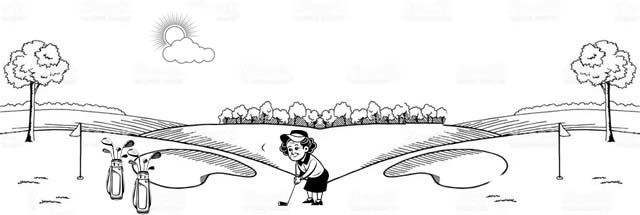
'Twas a cold and misty morning on the first tee. His first shot went to the right and was short; almost a slice. He laughed and cried out: "Another geriatric shot!". A good laugh is never wasted. Such is the nature of my Old Man.
What is he to do? Improving his golf or managing his geriatric maladies? He decided to start managing both and embarked on some internet research. This is what he found.
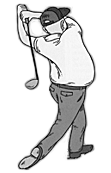
As one gets older, it's natural for one's body to change. For golfers aged 70 to 90, the most common challenges include reduced
flexibility, loss of muscle strength, stiff or arthritic joints, poorer balance, and the occasional aching lower back. These are all normal parts of ageing, affecting muscles, bones, and joints. While these normal parts of aging can make it a little harder to swing with speed, consistency and comfort, the good news is that many of them can be managed with the right exercises, good technique, and regular activity.
"So, let's look at what is happening to Seniors, a fact finding," said he
Muscle strength decreases with 30% loss of muscle cross sectional area between ages 50-80. Bone mineral density drops. Flexibility declines steadily with age, in particular and importantly, in the thoracic spine, hips, and shoulders.
This affects golf through a shorter back-swing, reduced shoulder turn, lower clubhead speed, difficulty squaring the clubface. Balance, too, naturally worsens with age due to vestibular decline producing swaying during the swing, difficulty maintaining posture, with mishits due to unstable base and higher fall risk on uneven terrain. Healthy seniors who walk the course walk longer distances than those who rely more on carts. Walkers report more fatigue and lower scores. Fatigue contributes to late-in-the-round scoring decline, poor concentration and a loss of swing tempo.
And then there is a vision and vestibular decline. This is not always discussed in
golf literature, but common on the golf course. It results in reduced depth perception,
slower visual tracking and lost balls. Vestibular decline produces dizziness and vertigo.
These affect alignment, balance, and ball tracking.
In summary most golfers in this age-range experience a combination of reduced
flexibility, reduced strength, joint stiffness/arthritis, lower back pain, balance difficulties,
reduced endurance and swing inconsistency. These are normal, predictable
physiological changes, but all are manageable with targeted exercises, equipment
choices, and swing adjustments.
And my Old Man pondered: "What can He do about it?" This is what he found and recommended:
Choose Right Equipment!
** Use a Senior Flex Shaft! As swing speed decreases with age, a more flexible shaft helps: Generate easier clubhead speed; Launch the ball higher; Reduce vibration on mishits (gentler on joints). Senior-Flex was previously known as A-Flex for Amateur-Flex, whilst L-Flex is Ladies-Flex.
It is a good choice for male golfers with slower swing speed (100 -130km/h); women, too, could use L flex or A flex.
** Choose Lightweight Graphite Shafts! Switching from steel to graphite reduces fatigue and increases swing speed. Lighter total club weight makes a swing easier and helps maintain club-head speed even with reduced strength.
** Increase Driver Loft (12°-15° Recommended)! Higher loft creates higher launch, more carry distance and more consistent contact. Most golfers 70+ benefit from 12° to 15° loft drivers.
** Use a Shorter Driver Shaft (44" - 111-112cm)! The standard (45.5-46") modern driver is too long for most seniors. Shorter length improves centre face contact, reduces slice tendency and increases consistency; often improves total distance despite slightly lower speed.
** Play Low Compression Golf Balls! These balls compress more easily at slower swing speeds and thus produce more distance, softer feel and straighter ball flight. Look for compression ratings 30-60 (soft).
** Replace Long Irons with Hybrids! At age 70-90, long irons become difficult to launch. Hybrids launch higher with less effort, are more forgiving and give better distance and consistency. Replace 3 iron, 4 iron, and, possibly, 5 iron.
** Consider High Launch Fairway Woods! Use more lofted woods such as 7 wood (21°); 9 wood (24°). These fly higher and farther than long irons.
** Choose Wider Sole, Higher Bounce Wedges! These reduce digging in and help create cleaner strikes from: soft turf, bunkers and rough.
Do the "Right" Thing - Physical, Body and Technique Tweaks !
** Shorten Your Back-swing! A full shoulder turn becomes difficult with age! A three quarter swing protects your back, improves balance, increases centre contact, distance and reduces fatigue. Do this and you'll ,often, hit it straighter and just as far.
** Increase Your Stance Width Slightly! A wider stance improves stability, improves balance and the ability to turn through the ball smoothly. This is important technique for older golfers with reduced joint strength.
** Add More Hip Turn! At advanced age, restricting hip turn is counterproductive. Allowing hips to rotate freely reduces stress on the lower back, makes it easier to complete the back-swing and helps maintain rhythm and power. Always think this: "Turn the hips early, don't force a shoulder only coil."
** Use a Slower, Smoother Tempo! A smooth tempo improves timing, consistency and energy efficiency.
Thus: count "1…2…3" on back-swing, "4" on down-swing.
** Move the Ball Slightly Forward in Your Stance! For drivers, ball position should be Inside the lead heel or even slightly forward of it for those with limited rotation. This helps create higher launch, lower spin and longer carry.
** Focus on Centre Face Contact Not Speed! At advanced age, solid contact produces more distance than raw club speed. To improve centre contact keep head quiet, stand a bit taller, make a slower, more controlled takeaway and the light grip pressure: 4/10, not tight. Better contact alone can add 15-20 metres.
** Use More Wrist Hinge (Lightly)! Many senior golfers lose wrist hinge due to stiffness. allowing hinge gently helps to generate clubhead speed and improve strike consistency. Think: "soft hands, natural hinge".
** Prioritize Balance Over Power! Use this check list: eyes on the ball, weight on the lead foot, finish facing the target and hold this stance for 2 seconds. If you can't hold your finish for 2 seconds, your swing is too fast.
** Add Simple Flexibility and Strength Exercises. All general fitness exercises are good, especially gentle torso rotations, light resistance band exercises, daily hamstring and hip stretches, A little bit of mobility and balance work dramatically improves distance and accuracy.
But above all, before you start at the first tee on the cold and misty morning, please, do a 5 minutes of warm up! This, if nothing else, will improve your game greatly!
However, if you do not follow any of these recommendations, please, remember this:
Nobody, absolutely nobody on the golf course cares how well or how badly you play... just play your game and enjoy!
A Link to print version:
THE TRAVAILS OF SENIOR GOLFER
Download PDF