THUS SPOKE MY OLD MAN !
Welcome to the Idle Words Said in Passing!
Yet Another look at the Quantum Theory!
Jan Vade, A Casual Observer
ANOTHER PERSONAL JOURNEY INTO A QUANTUM FIELD
During my exploration and learning about the historical development of Quantum Mechanics (https://vademaster.com/QuantumEssay.html), I inadvertently succumbed to a classical misconception, a persistent historical error or misconception that has influenced both physics and philosophy: the notion of the imaginary observer. Consequently, by becoming ensnared in these historical semi-fallacies, it is possible that my previous essay may have conveyed some misleading interpretations
It remains remarkable that Werner Heisenberg succeeded in articulating the foundational principles that would ultimately form our most robust framework for describing physical reality. I noted that his approach focused exclusively on the outcomes that observers obtain when measuring particles. While this perspective proved extraordinarily fruitful and represented a genuine conceptual advance in our understanding, it has also led physicists into enduring conceptual difficulties for over a century.
The central challenge lies in clarifying what constitutes an observer and what qualifies as an observation. How are we to comprehend a form of reality that appears, in some necessary way, to depend on the presence of an observer?
Approaching the issue from a philosophical standpoint, we may ask whether the introduction of observers, an arguably unnecessary conceptual entity, is truly the most effective path toward understanding the quantum domain. Do we, in fact, require observers at all?
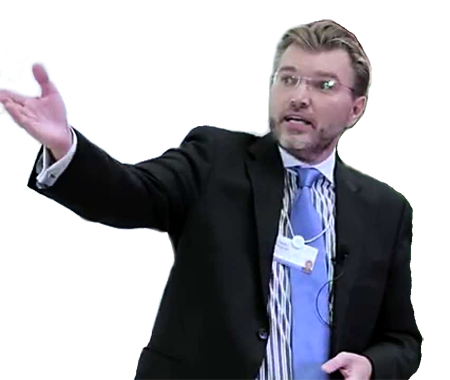
We don't need observers, it makes no sense to talk about them. There is a much more consistent and reasonable way to describe the quantum…." Says Prof Vlatko Vedral (Oxford)
Although this of absence of observers framework possesses considerable internal coherence, it leads us into, decidedly, unfamiliar territory. It asserts not only that observers do not exist, but also that particles themselves are absent. And what, then, are we to make of "space and time"?
These questions are undeniably complex, yet they merit careful examination, for they may illuminate new pathways toward our present understanding of quantum theory,
and perhaps even beyond it.
To begin, it is useful to consider briefly the structure of modern physics and the difficulties it has generated. Observers were a foundational element of physical theory long before the emergence of quantum mechanics; indeed, they played a central role in Albert Einstein's development of both special and general relativity.
The latter theory posits that space and time are intrinsically unified within the fabric of space-time, and that the curvature of this fabric gives rise to the phenomenon of gravity. This perspective will be critically examined in subsequent discussion; however, one notable implication of the original concept is that individuals situated in regions where the curvature of space-time varies will perceive the passage of time at differing relative rates.
In the educational context of relativity, it is common to refer to "observers," often conceptualized as people. In reality, however, the temporal experience of any moving entity, including, for instance, an atom, will and must vary relative to objects located in distinct gravitational fields. These variations do not require explicit observation to occur, thereby negating the necessity for a specialized category of "observers."
General relativity constitutes one of the two foundational pillars of modern physics, the other being quantum theory. The core principle of quantum theory is that, at the most fundamental level, reality is composed of discrete units. For example, when atoms absorb or emit energy, this process occurs in quantized packets rather than as a continuous flow.
Notably, the concept of the observer is also integral to quantum theory, as it differentiates between the state of particles prior to and following "observation". Prior to observation, particles are described by the wave function, an equation that delineates a spectrum of possible properties, a superposition.
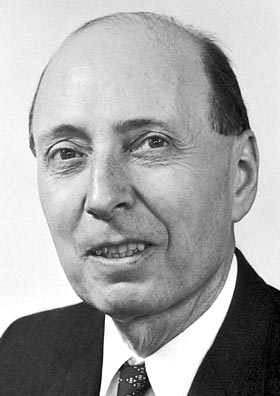
Nobel Prize in Physics, 1963
Upon observation, the wave function is said to "collapse" into a definite value. This framework, however, introduces a range of unresolved questions, the most fundamental of which concerns the mechanism and rationale behind wave function collapse. It also engenders paradoxes, such as the "Wigner's friend" scenario, originally conceived by physicist Eugene Wigner.
Wigner imagined a scenario in which an individual, referred to as a "friend," conducts a quantum measurement within a sealed laboratory, while Wigner himself remains outside. The central issue arises when comparing the respective accounts of reality held by these two individuals . From Wigner's perspective, having not observed any outcome, the entire laboratory is described by an indeterminate (fuzzy) wave function. Conversely, for the friend inside the laboratory, a definite result has been obtained. This paradox prompts the question of when, precisely, an observation becomes definitive.
While some physicists contend that quantum theory requires modification to address such issues, Many do not share this view. To clarify this perspective, it is essential to understand the phenomenon of entanglement, which Erwin Schrödinger identified as the "characteristic trait" of quantum theory.

Although quantum entanglement is often regarded as enigmatic, it is, in essence, a particular correlation between two quantum systems such that the measurement of one immediately reveals information about the properties of the other. The crucial point is that what is commonly referred to as an "observation" is the
moment at which two systems become entangled. While the entity that becomes entangled may be a person, as an "observer", however, this is not a necessity.
To illustrate this, consider a well-known experiment in which a photon, existing in a superposition, passes through two slits in a screen simultaneously, thereby producing an interference pattern upon striking a second screen. However, if one determines through observation which slit the photon traverses, the interference pattern does not happen. It is important to recognize that if any other system becomes entangled with the photon in a manner that reveals its path, the same effect is observed. Thus, the focus should shift from "observers" to the concept of entanglement. This perspective also resolves the question posed by Wigner's paradox: there is no "ultimate" observer, indeed, there are no observers at all.
What actually transpires is that the system and the observer (the latter being merely another system) become entangled. The principal lesson to be drawn is that quantum theory already encompasses all that is necessary to comprehend reality; it is incumbent upon us to accept its full implications, however counterintuitive they may appear. With this foundation, we may proceed to examine a central concept in physics: that of particles.
To properly address this concept, it is first necessary to consider the notion of fields. A field may be defined as an entity that permeates all of space and evolves over time, a notion originally formulated by Michael Faraday in the early nineteenth century. Within classical electromagnetic field theory, the values of the electric and magnetic fields are expressed through ordinary (or classical) numbers, so-called c-numbers, analogous to familiar quantities such as "3 meters." At each point in space, three components of the electric field and three components of the magnetic field are specified.
Quantum theory, by contrast, introduces the array of quantum fields. In this setting, each point in space is no longer characterized by single numerical values, but rather by collections of numbers known as quantum numbers or q-numbers. This distinction is of considerable significance. Werner Heisenberg's 1925 publication is widely regarded as the starting point of quantum physics precisely because he was the first to promote particle positions and momenta to the status of q-numbers. Although the difference between c-numbers and q-numbers appears deceptively simple, it is in fact profound, and will be revisited later.
Despite this, the full implications of quantum fields are not yet universally accepted. The quantization of the classical electromagnetic field implies that the field can oscillate in more modes than previously assumed. Quantum field theory predicts four such modes, each of which may, in principle, manifest as a particle, that is, as a photon. Empirical evidence, however, indicates that photons are observable in only two of these modes. The remaining two modes, commonly referred to as "ghost" photons, are fundamentally unobservable, as they cancel out and cannot be detected even in principle. These ghost photons are therefore both unobservable and unavoidable.
Although such circumstances may appear philosophically troubling, they are by no means unusual within scientific theories. Many theoretical frameworks depend on assumptions and idealizations of this kind; without them, the theories themselves would fail to function.
These unusual features should not be dismissed. Rather than ignoring them, it is important to incorporate them into our understanding. Chiara Marletto and Vlatko Vedral (University of Oxford) have proposed that, although ghost photons cannot be directly observed, they may become entangled with electrons under suitable conditions, and that this entanglement could, in principle, be detected. By placing an electron into a superposition, it may be possible to induce entanglement with these ghost photons, with the resulting correlations made observable through sufficiently precise measurement. While such an experiment would be demanding, it is regarded as feasible with current technological capabilities. As Vedral notes, "It would be a quantum equivalent of seeing a ghost."
If this experiment were to demonstrate that these ghost entities can be entangled, as it can be expected, the implications would be significant. Conventionally, the entities considered capable of entanglement are particles. However, these ghosts cannot be truly classified as particles; rather, they are q-numbers within an equation. This distinction is crucial: it is the q-numbers that are fundamental, not the conventional notion of a "particle." The fact that particles possess q-numbers has led to the misconception that particles themselves are the fundamental constituents of reality, whereas it is, in fact, the q-numbers that hold this status.
Further analysis reinforces the argument that particles are not truly real. Consider, for example, an individual particle such as an electron. According to standard quantum theory, prior to measurement, the particle exists in a superposition of states; simultaneously occupying multiple positions, each described by q-numbers. If one adopts the perspective that q-numbers constitute the essence of reality, it follows that these q-numbers can themselves be entangled. In other words, a particle in superposition may be regarded as "entangled with itself."
While this view is not universally accepted among physicists. Vedral and Dunningham proposed an experiment, more than a decade ago, to test this hypothesis empirically . The experiment involved creating a delocalized state for a single particle, placing it in a superposition across two distinct physical locations. To verify whether this superposition exhibits entanglement, independent measurements must be conducted at each location to determine whether they violate Bell's inequality, which is the definitive criterion for entanglement.
There is already some evidence supporting the existence of single-particle entanglement. In 2004, experiments led by Björn Hessmo demonstrated that individual photons distributed between two positions do indeed violate Bell's inequality. This finding suggests that photons are not the fundamental elements of reality; rather, it is their q-numbers that are of primary importance. Nevertheless, photons are massless, and similar experiments have yet to be conducted with objects-with-mass, such as atoms or electrons, due to the technical challenges involved. Despite these difficulties, one can be confident that the results would be the same.
-----------------------------------------
Explanatory Note:
Q-numbers, or quantum numbers, are mathematical operators fundamental to quantum physics. Unlike classical numbers (c-numbers), which describe measurable quantities in classical physics, q-numbers encode the possible states and behaviours of quantum systems.In summary: Q-numbers are central to quantum theory, providing the framework for phenomena like superposition and entanglement, and fundamentally reshaping our understanding of reality.
- Primacy of Q-Numbers: Quantum theory regards q-numbers as more fundamental than particles. Particles, such as electrons or photons, are manifestations of quantum fields, which are described by q-numbers at every point in space.
- Q-Numbers vs. C-Numbers: C-numbers are ordinary values used in classical physics. Q-numbers, in contrast, are operators that represent multiple possibilities simultaneously, such as a particle existing in a superposition of locations
- Superposition and Entanglement: Q-numbers enable quantum systems to exist in superpositions and allow for entanglement, where the properties of one part of a system are intrinsically linked to another, even over large distances.
- Experimental Support: Phenomena like entanglement and superposition are best explained by the behaviour of q-numbers. Experiments, such as those demonstrating violations of Bell's inequality, confirm that entanglement is a property of q-numbers rather than particles themselves.
- Broader Implications: recognizing q-numbers as the fundamental elements of reality challenges classical intuition and highlights the importance of abstract mathematical structures. Mastery of q-numbers is essential for progress in quantum technologies, including quantum computing and communication.
__________________________________________
Let us now address the concepts of space and time. These topics are often regarded as the final frontier in physics and are intimately connected to one of the discipline's most significant unresolved challenges: the unification of general relativity and quantum theory into a comprehensive theory of quantum gravity. Given the preceding argument that all entities should be considered as composed of q-numbers, it may be expected that space and time themselves ought to possess quantum characteristics.
While this perspective is shared by many researchers, Vedral proposes a more radical stance: space and time do not exist as physical entities. Similar to the notion of "observers," they serve merely as convenient labels or bookkeeping devices, without any corresponding physical reality. Consequently, the process of quantising gravity should not be interpreted as quantising space-time; rather, it involves quantising the gravitational field, transforming Einstein's c-numbers into q-numbers, in a manner similar to the quantisation of other fields.
This distinction may appear subtle. In general relativity, the gravitational field is conventionally understood as the curvature of space-time. However, a different interpretation can be suggested: it is not space or time that undergoes curvature, but rather fields such as the electromagnetic field, which binds all matter. Atoms, molecules, clocks, and rulers are all held together by electromagnetic forces.
According to Vedral, the gravitational field interacts with these fields, directing how they should bend. For practical purposes, these fields are often conceptualized as being distributed across an abstract grid referred to as space-time. While this framework is useful, it is important not to misconstrue space-time as a fundamental aspect of nature.
Although many physicists may view this position as extreme, and it is admittedly challenging to conceive of any current experiment that could fully validate quantum theory in this context, it is suggested that gravity should be treated as any other quantum field. Thus, there are no particles, no space, and no time; the fundamental constituent of nature is the q-number. In conclusion, a thorough adoption of this principle may yield novel insights.
When discussing the interactions of quantum fields, the mathematical construct known as the quantum Hamiltonian is employed. It has long been a source of concern that these Hamiltonians intermingle q-numbers with ordinary c-numbers, such as physical constants like the speed of light or the electron charge. This procedure has become standard practice; yet some find it to be unsatisfactory. Over the past century, physicists have adapted classical equations by selectively introducing quantum elements. Yet, it would be more elegant, and consistent with the philosophical perspective Vedral advocated, if our equations were fundamentally quantum in nature.
This notion is not unprecedented. In the 1980ies, physicist David Deutsch proposed the complete elimination of c-numbers, suggesting that all quantities in quantum Hamiltonians should be represented as q-numbers. Implementing such a change, however, would yield unusual consequences. Consider, for instance, the speed of light, which is currently treated as a c-number. If this were instead represented as a q-number, which, by definition, describes a point in a quantum field, it would imply the existence of a new quantum field associated with the speed of light.
This scenario is reminiscent of the outcome when the electromagnetic field was quantized, leading to the emergence of so-called "ghosts", an indication that reality may be more complex than previously assumed. The concept can be empirically tested. If additional quantum fields exist, particles should be capable of entangling with them. For example, when an atom and a photon are maximally entangled, the presence of another mediating field would result in the formation of a three-body entangled system. Consequently, the entanglement strength between the photon and the atom would be diminished relative to expectations. In 2022, Jim Franson at the University of Maryland proposed a method for detecting such entanglement, which is conceptually similar to experiments designed to detect ghosts, mentioned earlier in this essay.
Although this experiment has not yet been conducted, it may be technologically feasible. In principle, one could envision extending quantization even further: q-numbers are essentially tables of numbers, and it is conceivable to "upgrade" all ordinary numbers within those tables to q-numbers, and to repeat this process indefinitely. In this framework, the universe consists of tables within tables, all composed of q-numbers. Philosophers often object to infinite regress, but nature is not obliged to conform to philosophical preferences.
The universe constitutes an inexhaustible reservoir of mysteries, presenting physicists with an unlimited domain for investigation while simultaneously posing considerable challenges for amateurs attempting to comprehend its more abstruse concepts. For those without formal training, the abstract mathematical structures, counterintuitive principles, and frequent departures from classical intuition inherent in quantum theory can be especially daunting.
Amateurs often struggle with foundational ideas such as superposition, where a particle can exist in multiple states simultaneously; and entanglement, which links the properties of distant particles in ways that defy classical explanation. The concept of wave function collapse, which describes how probabilities resolve into definite outcomes upon measurement, is another source of confusion, as is the philosophical debate surrounding the role of the observer in quantum phenomena. Furthermore, the technical language and advanced mathematics required to engage with primary literature frequently create barriers to understanding.
The scarcity of accessible explanatory resources and the prevalence of paradoxes, such as Schrödinger's Cat or Wigner's Friend, can lead to frustration, misconceptions, and misunderstandings. I am deeply aware of the difficulties amateurs face for I am one of them.

_______________________________________________________
On the Lighter Side:
Explanatory Note: Wave Function Collapse
A fundamental challenge with this compelling vision of reality is that all theories concerning the nature of our world are formulated by observers who propose hypotheses. The subsequent evaluation of these hypotheses by other observers, through the application of scientific methods, serves to refine them, retaining only those that withstand empirical scrutiny.
A particular difficulty within quantum mechanics arises from the prevailing tendency among Western scientists to conceptualize phenomena in terms of discrete objects and their classification. This approach has contributed to a perceived division between the microscopic realm and the macroscopic world of everyday experience.
To illustrate, consider the example of a domestic animal, a cat ! Your cat may be resting or sleeping in any number of locations in your home; each associated with a certain assigned probability. Upon returning home and directly observing your cat in one specific location, these probabilities "collapse" to a single outcome.
This phenomenon mirrors the collapse of probabilities described in quantum theory. The question thus arises: does this present a conceptual problem?
So, let it be! Your life will now change forever. Every time you will return home you will ponder the endless probabilities of your cat sleeping in some improbable place until your theorising collapses at your cat's pleasure!
___________________________________________________
Yet Another Look at Quantum Theory
This essay is available for download here:
Download PDF
A Light-hearted look at Quantum Field and Q-numbers
This presentation is available for viewing here: